Particularly notable at Climate Week was the number of sessions on adaptation and resilience. This, combined with the glacial pace of emissions reductions, gives the sense that key players are more interested in surviving what’s coming, rather than stopping it. But as UNEP hammered home, mitigation is still critical. Every fraction of a degree of warming avoided matters. But this is nothing that hasn’t been stressed for decades at this point. So, given the unflinching urgency of the report, we must be equally unflinching about the reality that nobody, no industry, no country, wants to mitigate their emissions, because mitigation is really costly.
There is now little doubt that minimizing the damage from climate will require phasing down fossil fuels and reducing livestock herds. Acceptance of the former is advancing, with more than 50 countries meeting in Colombia this year to grapple with how exactly to do it. But if fossil fuels are politically toxic, livestock is a downright miasma. Yet last year’s landmark EAT-Lancet Commission and subsequent studies on food systems estimated that a transition towards sustainable and healthy food systems could mean 37-45% fewer ruminant animals and 20-22% fewer dairy animals than under business-as-usual projections.
Phasing down and out industries is a costly affair. All those stranded assets. All that foregone revenue. One estimate puts stranded oil and gas assets alone at $1.4 trillion. Recent analysis for food systems shows the annual value of global agricultural production could be $1.6 trillion lower in 2050 than under business as usual, $1.3 trillion of which comes from lower livestock production value. These are the transition costs buried inside the transformation of our energy and food systems, of avoiding those future degrees of warming.
We’ve known the economic case for paying these costs is strong ever since Nicholas Stern told us in 2006. The costs from climate change will be so extortionate and the economic value losses so devastating that, in the final wash of the cost-benefit analysis, the benefits of mitigation outweigh the costs. Mitigation will lead to better economic welfare – therefore governments, whose job it is to improve economic welfare, should shill out of the public budget, or regulate industries, towards that end.
Our mistake was in assuming that a strong economic case equates to a strong financial case. It doesn’t. Economics is about improving public welfare. Finance is about improving risk-adjusted returns. The two are not the same on mitigation. And at the end of the day, the finance – the P&L, the public ledger – precedes the economics. Someone has to foot the bill up front.
The urge is then to try to make the financial case for paying those up-front costs, with now-rancorous calls for ‘scaling up’ investments in mitigation technologies. And of course, we need investment to rapidly scale up renewables. Feed additives are promising. But at the end of the day, even with all this technology, existing industries will still have to be phased down. And there is just plain no business case for phasing down an industry – especially when demand is projected to remain high in the near-term, as it is for both fossil fuels and beef and dairy.
No, the problem is not the lack of a good economic case or even the lack of investment. The problem is the transition costs, which are unavoidable and cannot be decoupled from efforts to avoid the future warming that awaits us. The bill has come due. And bills have to be paid.
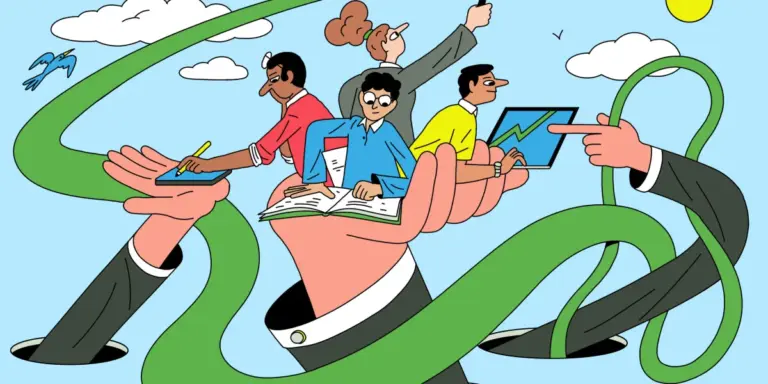
So who will pay it? Even as strong as the UNEP report is, the language of who does mitigation is so vague as to almost verge on the passive voice. “Emissions will be cut. Demand will decline.” But where will those costs fall? Governments could make industries (and so consumers) pay. But the fossil fuel and agriculture industries, we can be certain, will continue fighting tooth and nail to avoid paying them, as they have been doing for several decades. Alternatively, governments (and so taxpayers) can pay. But with public debt rising and budgets already under strain, governments have little appetite for adding another enormous bill to the public ledger.
Which means we are, in the most Grecian sense of the word, in a tragedy. Mitigation means sailing between Charybdis and Scylla – where one path, no mitigation, will hurt everyone and the other, aggressive mitigation, would require some to pay the tremendous costs to save everyone else. The one option we don’t have is to not make the choice.
The opinions expressed in Fortune.com commentary pieces are solely the views of their authors and do not necessarily reflect the opinions and beliefs of Fortune.
About the Author