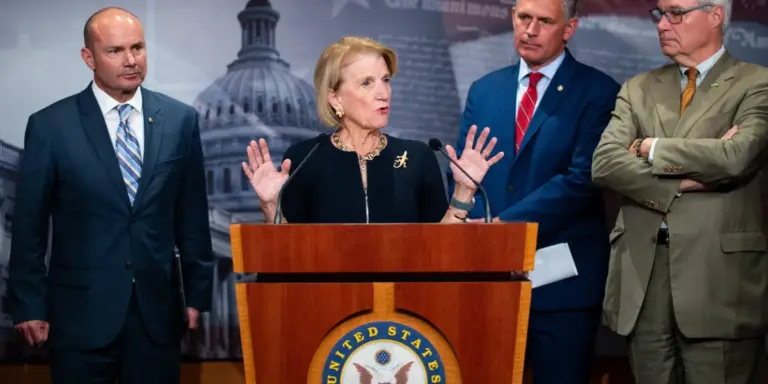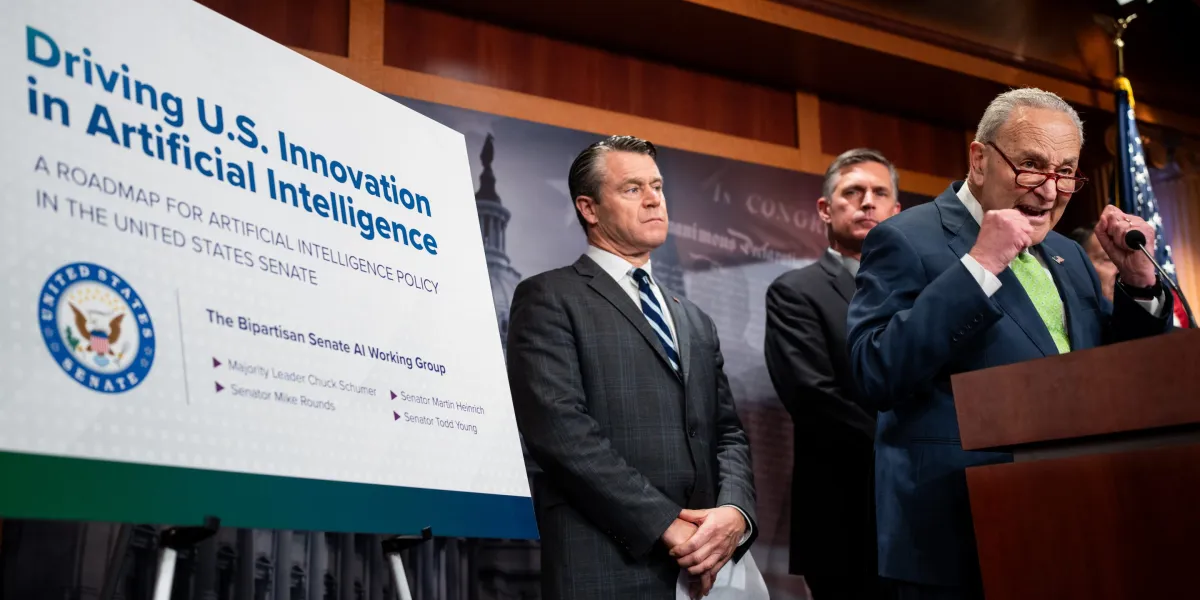
The CREATE AI Act would put the National Artificial Intelligence Research Resource (NAIRR) on permanent footing at the National Science Foundation. A pilot version of the NAIRR has operated since early 2024, supporting more than 600 cutting-edge AI research projects across all 50 states. The NAIRR was launched under the Biden administration, endorsed in the Trump administration’s AI Action Plan and is now championed across the aisle by Senators Todd Young (R-Ind.), Martin Heinrich (D-N.M.), Mike Rounds (R-S.D.) and Cory Booker (D-N.J.). The companion House bill, introduced by Reps. Jay Obernolte (R-Calif.) and Don Beyer (D-Va.), continues to gain bipartisan support.
Read more Stripe, Visa and over 140 other businesses to launch stablecoin to rival Tether and Circle
This kind of cross-administration, cross-aisle continuity is rare in Washington.
The NAIRR pilot removed cost barriers to conducting advanced AI research and served as the foundation of a shared technology ecosystem. Researchers, startups, nonprofits and federal agencies gained access to supercomputing power that most institutions outside the private sector cannot afford. CREATE AI would permanently remove this addressable bottleneck and spark enhanced competition among our nation’s best researchers.
AI research capabilities should not be left to industry alone. History shows that the most consequential technological advances emerge from the overlap between academic labs, government-funded research and private industry. That cross-sector competition is one of the most reliable drivers of economic growth. Yet the compute, curated data and evaluation tools that power advanced AI research today sit almost exclusively inside a handful of private companies. Reopening that access is itself a competitive advantage.
CREATE AI also matters for international competition. China is building a state-directed AI research stack at scale via its National Integrated Computing Network. The United Kingdom has committed up to £2 billion through 2030 to fund its public AI Research Resource. The European Union has launched its InvestAI initiative to mobilize up to €200 billion for public-private partnerships on AI infrastructure. If the United States wants to keep its edge, it cannot leave its university researchers, public-sector technologists, and small businesses waiting for compute time on commercial clouds they cannot afford.
Hyperscalers stand to benefit from CREATE AI as well. Shared public research can accelerate energy optimization and guide hardware developers toward improvements in the training and inference capabilities that power their processors. From Cognizant’s perspective as an AI builder, our focus on enterprise-ready platforms, agents, and models could gain support from best-in-class public research — building the trust needed for AI deployment in clinical workflows, fraud detection, supply chains, and legacy government systems.
Passing the CREATE AI Act means faster, safer, and smarter AI at scale. Shared public infrastructure is not a substitute for private innovation but a complement to it, giving less well-resourced researchers the ability to fully contribute to our AI future. It also enables progress across longer time horizons, free from the pressure of quarterly earnings. Private-sector models can be stress-tested for efficacy, and risks can be identified and addressed without a profit motive shaping the outcome.
The benefits extend well beyond the research community. CREATE AI can accelerate the next generation of transformative startups, broaden AI adoption across companies of every size, and translate a widened opportunity set into substantial job creation across the United States. The thousands of AI-focused companies that sit between a handful of hyperscalers and the next great startup stand to gain the most.
Members of both parties should treat the CREATE AI Act as a rare chance to pass an AI bill that has already been debated, refined, and proven in pilot form. It does not require Congress to resolve contentious AI policy fights. It does not pick winners. It does not burden industry with new compliance measures. But it does build the rails on which American AI research can run, opening participation beyond a handful of companies. That is how the United States stays ahead.
The opinions expressed in Fortune.com commentary pieces are solely the views of their authors and do not necessarily reflect the opinions and beliefs of Fortune.
About the Author