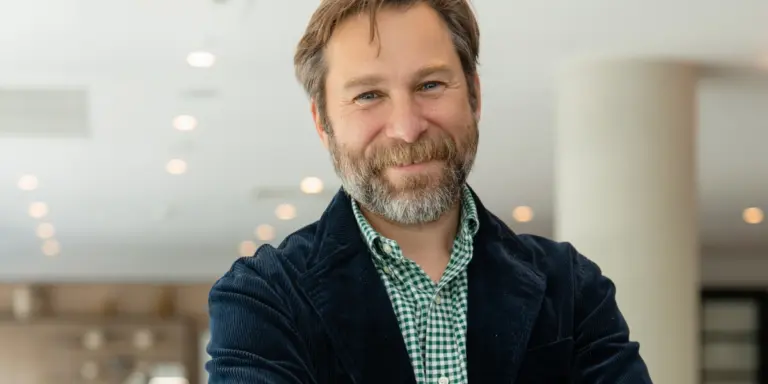
Will Meara knows the feeling. He’s been having it for two-and-a-half years.
“There’s a great Twitter account … the Freddy LA one — it’s a German guy and everyone’s seeing America through his eyes and seeing real America,” Meara told me recently. (The account has sadly already run its course, with Freddy commenting on Instagram that he shut it down because “too many people seem to have a problem with us having a genuinely good time here in the country.”)
Read more The greatest startup in history: What we can learn from America’s founders at today’s AI frontier
Meara said that he was surprised, just like Freddy was, when he finally met the real America. “I was obviously familiar with the New Yorks and LA’s of the world, but because of the cities and towns that we now operate in, like on any given weekend, I could find myself in North Dakota, for example; I was there a couple of weeks back, or rural Virginia. And it’s really getting to see the heartland of America and how great the people are and how friendly they are.”
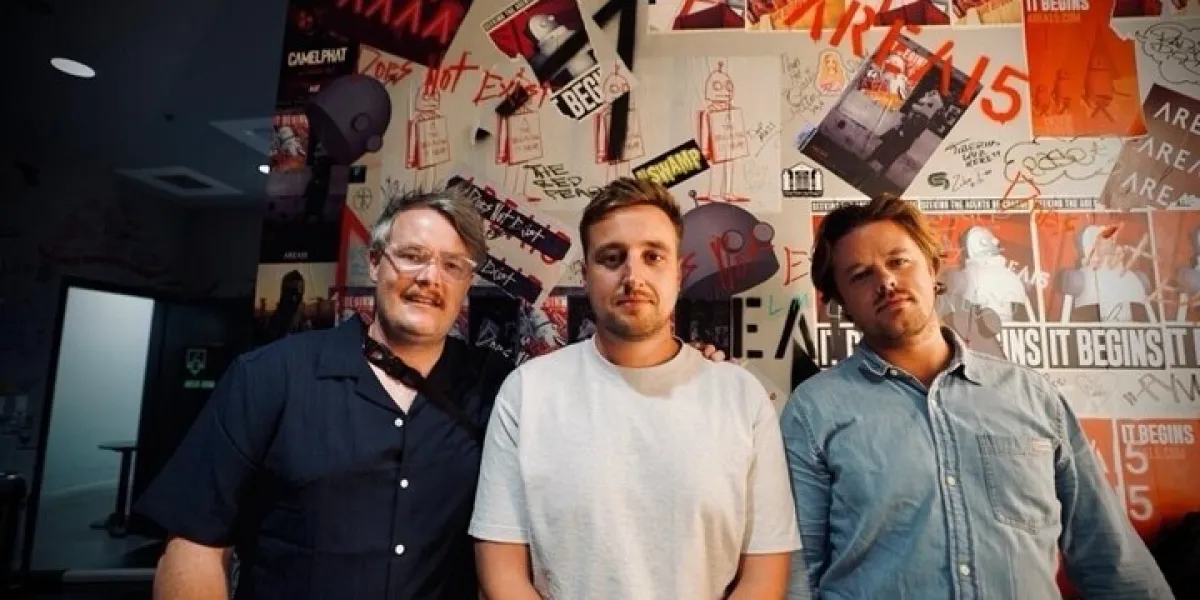
Meara is one of three Irish co-founders behind Locomotive, the live entertainment company, and its flagship product Bingo Loco. One of them, Craig Reynolds, moved to Denver in 2025, and they headquartered their North American operations there the next year. Reynolds said he’s spent the past year doing what no major entertainment promoter had thought worthwhile: driving to Frisco, McKinney, Plano, college towns across the South. Going to LSU football games. Tailgating at Ole Miss. “I’ve been to like Death Valley and LSU or Ole Miss and really experienced the heart of American culture, tailgating, getting to know folks and hear stories,” Meara said. “I think it’s great that now the World Cup is here, other people are having that exact same experience and seeing what the real America is.”
That real America — gregarious, community-minded, hungry for shared experience and dramatically underserved by the industries nominally paid to entertain it — is the foundation of a quietly enormous, global $24 million business. Reynolds, Meara, and their co-founder, Stephen Lawless, found it first. The rest of the world is only now showing up.
A Basement in Dublin
Locomotive’s flagship product is called Bingo Loco, and the name undersells what it actually is. For two-and-a-half hours, attendees sit at long communal tables — Hogwarts-style, Reynolds said — and play bingo while a live MC works the crowd, a DJ runs throwback anthems from the ’90s and early 2000s, and random audience members are pulled onstage for lip-sync battles, air guitar competitions, and comedy bits, with prizes ranging from international holidays to air fryers. It is, by design, the lowest-IQ game possible — Reynolds uses that phrase himself, approvingly — staged inside what amounts to a traveling participatory variety show.
It started in 2017, when Reynolds, Meara, and Lawless convinced 100 friends to show up to a Dublin basement on a rainy Thursday night. They had tried other things first — yoga disco nights, hot tubs inside nightclubs (“not great for insurance,” Meara notes) — but Bingo was somehow the concept that clicked. Nine-and-a-half years later, they run 2,000 shows annually across 15 countries and 300 cities, selling over a million tickets and generating $24 million in ticket sales and roughly $8 million in profit, according to records reviewed by Fortune. They did it without a dollar of outside investment, boosted, they say, by the millennial thirst for nostalgia, connection and a touch of their childhood.
The monoculture thesis
The first insight behind the business is obvious in retrospect. Millennials — roughly 30 to 45 today — are the last generation with a shared musical memory. Before the internet fractured culture into a thousand niche streams, there was a time when everyone, everywhere, knew every word of “Everybody (Backstreet’s Back)”. Bingo Loco is built on that fact.
“Monoculture kind of went away when the internet fractured everything,” Reynolds told me. “But millennials are walking into a room with ’90s, 2000s nostalgia — and it’s like, oh, we all know this one.“
The second insight is harder to articulate but ultimately more valuable: millennials aren’t just nostalgic. They’re lonely. They grew up before smartphones, carry a physical memory of what it felt like to be genuinely present with other people, and now spend their days in a world of hyper-connectivity that somehow produces deep disconnection. Reynolds and Meara sensed this before “the loneliness epidemic” became a standard entry in every public health report.
“In today’s post-AI world, people are seeking connectivity more than ever,” Reynolds said. “As someone who’s operated in live events since university, I’ve never seen such appetite for it — people really seeking that moment of togetherness that can’t be replicated outside of a live experience.” The World Cup, with its delirious cross-cultural mingling in stadium concourses and Buc-ee’s parking lots and late-night barbecue joints, is essentially a massive live demonstration of the same thesis. Locomotive just had the ticketing infrastructure in place first.
Bingo Loco’s format is the solution, engineered almost accidentally. You’re dancing, then you’re sitting. You’re watching the stage, then you’re in conversation with strangers at your table. You’re playing a game that requires just enough attention to keep you present, but not so much that you can’t hold a conversation. “We’re just a conduit to connect people a little faster,” Meara says. The shared joke. The spontaneous singalong. The stranger who wins the air fryer and becomes, briefly, the hero of your evening — these are the micro-moments Locomotive has industrialized at scale.
The co-founders shared that they’ve grown organically through constant engagement with their fanbases, with a huge range of discretion up to each local host. The company recently launched in mainland Europe with shows now in Finnish, Swedish, Norwegian and Danish, and a key part of the appeal is cultural nuance, they explained to me, just as it would be different in, say the Dallas or Denver suburbs.
The distribution insight
What turned a successful touring concept into something resembling a platform is a third insight, this one about geography.
Live Nation and AEG are extraordinary businesses. They own the rooms, control the ticketing, and book tours six to eight months out. What they structurally cannot do, Reynolds argues, is fill the weeks in between. “In the two-, three-, or four-month range, they’ve got a lot of empty spaces that might not have been able to fill,” he said. “And they don’t have anything in-house to fill those dates.”
Locomotive does. And because their shows don’t require fans to travel far — “you’ll spend maybe 20 to 30 minutes in your car,” Reynolds says — they can carve up a sprawling metro in ways a touring act never could. In Dallas-Fort Worth alone, they operate in eight or nine micro-cities simultaneously: Frisco, Plano, McKinney, Arlington, Fort Worth. “When we heat-map and see where ticket buyers are coming from, we actually don’t see huge cannibalization,” Reynolds said. The same is true in greater Los Angeles, where they run shows in Long Beach, Anaheim, Costa Mesa, Oxnard, Riverside, Pomona, Hollywood, and Downtown — some of them weekly.
They may have built one of the most granular maps of American entertainment demand ever assembled by a company most Americans have never heard of.
The World Cup stumbled onto the same geography and reached the same conclusion. Kansas City, once questioned as a soccer market, became what one reporter called “the heart of soccer” during the tournament, its fans memorably warm, its barbecue instantly mythologized. An Argentine supporter whose entire culture is built around the asado tried the Kansas City dry-rub and offered perhaps the highest possible compliment: “The Argentine barbecue is my favorite. But this one is truly excellent.”
Reynolds has a theory for why the warmth keeps surprising people. “When you’re in the US and you show up, you want to do a deal, and you can show it’s win-win-win, or roll the dice — we’ll all get in together,” he told me. “You can see why America is an economic powerhouse: everyone’s willing to take a risk. That’s because the whole country is built on people who got in a boat and took a risk.” The same disposition that makes a stranger in Kansas City offer you a ride to the stadium in the rain is the one that makes a mid-market millennial in Frisco say yes to a bingo rave on a Wednesday night.
Denver as a command center
When asked why Reynolds chose Denver as Locomotive’s North American headquarters (and really its de facto global hub), he was pragmatic and business-minded, much like his adopted country. It sits near the center of the country. It punches above its weight in live entertainment — Red Rocks, Mission Ballroom, Fiddler’s Green. It attracts millennials drawn to mountains and outdoors culture. And it’s the third most-connected airport in the United States.
There’s also a more tactical reason. “Denver has the ability to cater to a huge diverse level of interest without the ad competition you get in New York or LA,” Reynolds explains. “It’s so much more expensive to experiment when you have those marketing budgets.” Locomotive tests a new concept roughly every two weeks; about one in five succeeds, and one in 20 becomes a blockbuster. Dallas-Fort Worth and Denver are their twin laboratories — cities where residents have enough disposable income to take a chance on something new, enough population to generate signal, and not so much competitive noise that a rough first weekend kills a good idea.
Co-founder Lawless, who didn’t join the Fortune interview, is similarly located in the Dallas area, a hotbed of Locomotive activity.
There is an almost anthropological quality to how Reynolds and Meara describe their American education. They arrived from the outside — without the ambient condescension of coastal media or the indifference of the major touring industry — and they were simply, genuinely delighted by what they found.
Locomotive figured out how to sell tickets to that friendliness years before it went viral. The World Cup will pack up after this summer. Their 2,000 annual shows will not.
About the Author