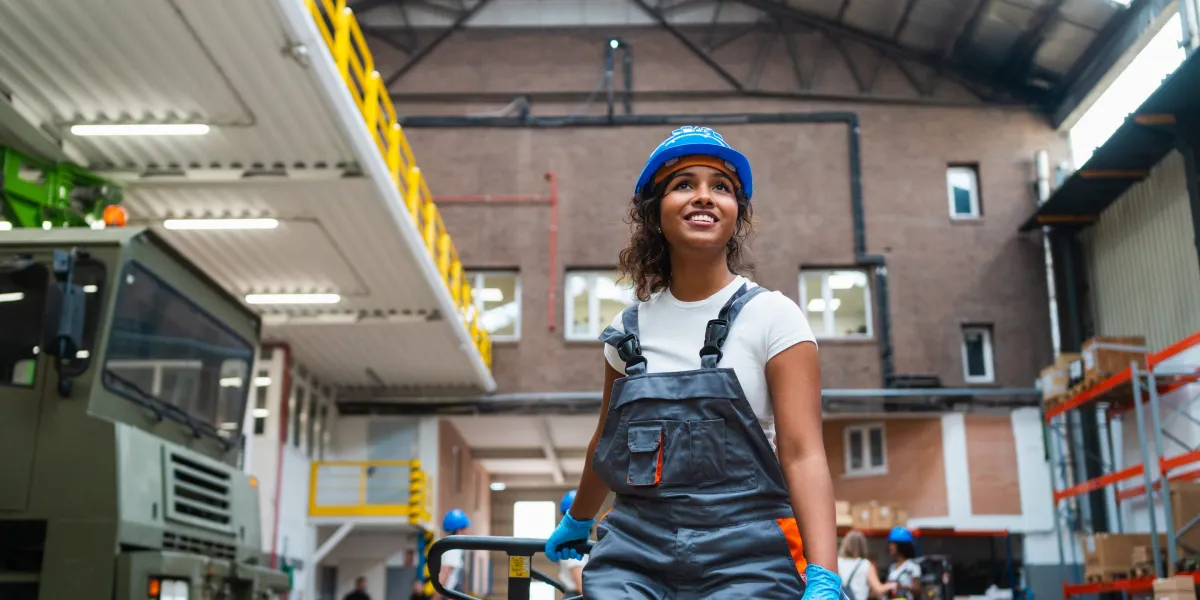
Land O’Lakes first introduced flex jobs at the tail end of the COVID-19 pandemic, in early 2022. Participants in the part-time program tell the company what times they’d like to work, and Land O’Lakes comes back with a slot that fits in their schedules. Most flex talent at the billion-dollar company log about 16 to 30 hours of work every week, with shifts built around employees’ availability rather than a fixed schedule. The famed food giant selling butter sticks, whipped spreads, and shredded cheeses changed its policy after flexibility became workers’ top priority, assembling a small HR team to test out the program at select sites.
Read more Homes are in short supply in the U.S. How a new law could change the market
“Regardless of work, location, generation, [or] type of work—flexibility, work-life balance—was one of the key things that we heard from across our organization,” Julie Sexton, chief human resources officer at Land O’Lakes, tells Fortune.
“The chief supply chain officer—who’s now retired—really came forward like: ‘Let’s challenge our notion here,’” she adds. “‘If everybody’s saying flexibility is important, we need to step beyond the paradigm of: that can’t happen in manufacturing environments.’”
Most opportunities to take advantage of the perk lie in operations and supply chain roles across 60 U.S. Land O’Lakes’ manufacturing facilities. However, the Fortune 500 business plans to roll out the benefit to all 140 locations nationwide, and says there are more flex options in housekeeping, office clerking, and sanitation. Sexton explains that leaders at different facilities weigh in if flex jobs are a possibility at their site, as requires extra staffing.
So far, the perk has proven to be a smash hit among workers—as well as a huge win for the business. Land O’Lakes says views and applications for flex roles outpace traditional roles by roughly 25%, and turnover among new flex workers is 12 points lower compared to that of recently hired full-time talent. It’s a critical advantage as the manufacturing sector grapples with persistent labor shortages and elevated turnover. By offering a benefit like flex jobs, the business can attract workers who otherwise couldn’t commit.
“People are looking for these opportunities,” the CHRO says. “If you can get a role that can flex around other key parts of your life, I think that speaks to what people really value after the experience of COVID, or just what people are looking for as they think about they balance work-life.”
Land O’Lakes’ choose-your-own-schedule policy is paying off for workers
Instead of demanding its thousands of employees across the country to fit one mold of work, Land O’Lakes is leaning into their diverse needs. Sexton says that the company employs college students, working parents, and caregivers who desperately need a workaround. Now, flex work professionals can call the shots on their part-time schedule—whether that means unloading trucks before sunrise or working a sanitation shift after the kids are asleep.
Read more A Yale professor says America is now an ‘oldigarchy’—and Boomers on LinkedIn are enraged
“Now I can get my son ready in the morning, drop him off at my mom’s house who will take him to preschool, and then I can pick him up at 1 p.m. every day,” Cypress Evans, a flex-job employee at Land O’Lakes, said in a press release. “I now have the opportunity to see his big milestones at school, take him to doctor’s appointments, his first t-ball practices. I won’t miss anything like that. And that means a lot to me.”
Alongside the flex-work program, Land O’Lakes also offers other ways to support staffers’ work-life balance. Employees working at the company’s Minnesota headquarters enjoy a three-day hybrid model, and staffers receive paid caregiver and emergency leave, as well as phased retirement plans. And beyond the company’s focus on flexibility, it’s also strengthening employee development by encouraging them to learn from one another.
Reverse mentoring is bridging divides in a multi-generational workforce
Another part of managing a large, multigenerational workforce entails creating cohesion across employees with different lives. So to facilitate that cross-generational connection, Land O’Lakes rolled out a reverse mentorship program in 2022, flipping conventions on its head by having junior employees lead the charge. The CHRO says she’s participated for at least three years in a row; it’s a popular initiative giving leaders a direct line to new perspectives, while helping younger workers build confidence and visibility.
“I think the value is about: How do we bridge the gap across those generations and really turn that into an advantage?” Sexton says. “There’s helping our more junior employees get up to speed faster and understand the organization. There’s value in our more experienced employees hearing a fresh perspective.”
And with more generations in the workforce than ever, the HR executive explains, there’s been a concerted effort to bridge those divides. The nine-month program is open to anyone at the business—with staffers paired intentionally across generations—and has drawn 900 employee participants so far. This year alone, there are 130 reverse mentorship duos. While entry-level workers help senior employees unravel their blind spots and assumptions, seasoned staffers are giving young talent the space to improve their professional career.
“What the junior employees bring is that fresh perspective. It’s a voice that, again, a more seasoned employee may not always hear from. And I think the benefit to the more junior employees, too, is it gives them a place to try out that voice,” Sexton says. “The other benefit that the more experienced employees bring is their knowledge and their wisdom about work.”
About the Author